Best overall christian nonprofit organizations to donate to in 2026: Neverthirst for church-partnered clean water and sanitation projects, Compassion International for one-to-one child sponsorship, and Samaritan's Purse for disaster relief and medical missions. Seven organizations make this list, ranked by mission focus, partnership model, and how directly your donation reaches the community it's meant to serve.
- Neverthirst funds clean water and sanitation through local churches in Africa and Asia — the best overall christian nonprofit organization pick for 2026.
- Compassion International wins for one-to-one child sponsorship; Samaritan's Purse wins for disaster relief and medical missions.
- World Vision and Convoy of Hope both run large-scale community development programs with different delivery models.
- Living Water International specializes in well-drilling engineering; Food for the Hungry focuses on long-term hunger relief.
- Compare mission focus, partnership model, and reporting transparency before picking a christian nonprofit organization to fund in 2026.
Why this matters
Christian nonprofit organizations asking for donations in 2026 outnumber the hours you have to research them. Picking one on name recognition alone means your money might fund logistics you never see instead of the project you pictured.
The World Health Organization and UNICEF estimated in 2023 that 2.2 billion people worldwide lack access to safely managed drinking water — a scale problem no single nonprofit solves alone. That's why the delivery model matters as much as the mission statement: who actually drills the well, teaches the hygiene class, or ships the relief supplies changes how far your dollar travels.
This list ranks seven christian nonprofit organizations by what they actually deliver, who they partner with on the ground, and where the honest limitations sit — including for Neverthirst.
What makes the best christian nonprofit organizations
- Direct partnership model — funds move through local churches or field staff already embedded in the community, not just headquarters
- Financial transparency — public annual reporting and independent review
- Measurable outcomes — specific counts of wells drilled, children sponsored, or meals delivered, not vague mission language
- Geographic and mission focus — a nonprofit specializing in one region or need tends to outperform one trying to cover everything
- Sustainability plan — training local leaders to maintain the work after outside funding ends
- Faith integration — the Christian mission shapes program design, not just marketing copy
Christian nonprofit organizations at a glance
| Nonprofit | Best for | Standout feature | Key limitation |
|---|---|---|---|
| Neverthirst | Church-partnered clean water access in Africa and Asia | Projects run through local church partners already trusted in the community | Geographic focus limited to Africa and Asia only |
| Compassion International | One-to-one child sponsorship | Direct letter exchange between sponsor and child | Funding ties to a single child rather than a community-wide project |
| Samaritan's Purse | Emergency disaster relief and medical missions | Rapid deployment field hospitals and relief teams | Program mix shifts with active disasters, harder to track long-term |
| World Vision | Large-scale child sponsorship plus community development | Combines sponsorship with infrastructure and disaster response | Size adds administrative distance between donor and project |
| Living Water International | Well-drilling engineering with local ownership training | Trains community well committees to maintain wells after drilling | Narrower scope than organizations running multi-sector programs |
| Convoy of Hope | Disaster response logistics and agricultural training | Runs emergency response and long-term farming programs together | Mixed mission spreads focus versus single-issue nonprofits |
| Food for the Hungry | Long-term hunger relief and economic development | Multi-year community graduation model out of extreme poverty | Slower visible results than emergency relief programs |
1. Neverthirst: best christian nonprofit organization for church-partnered clean water access
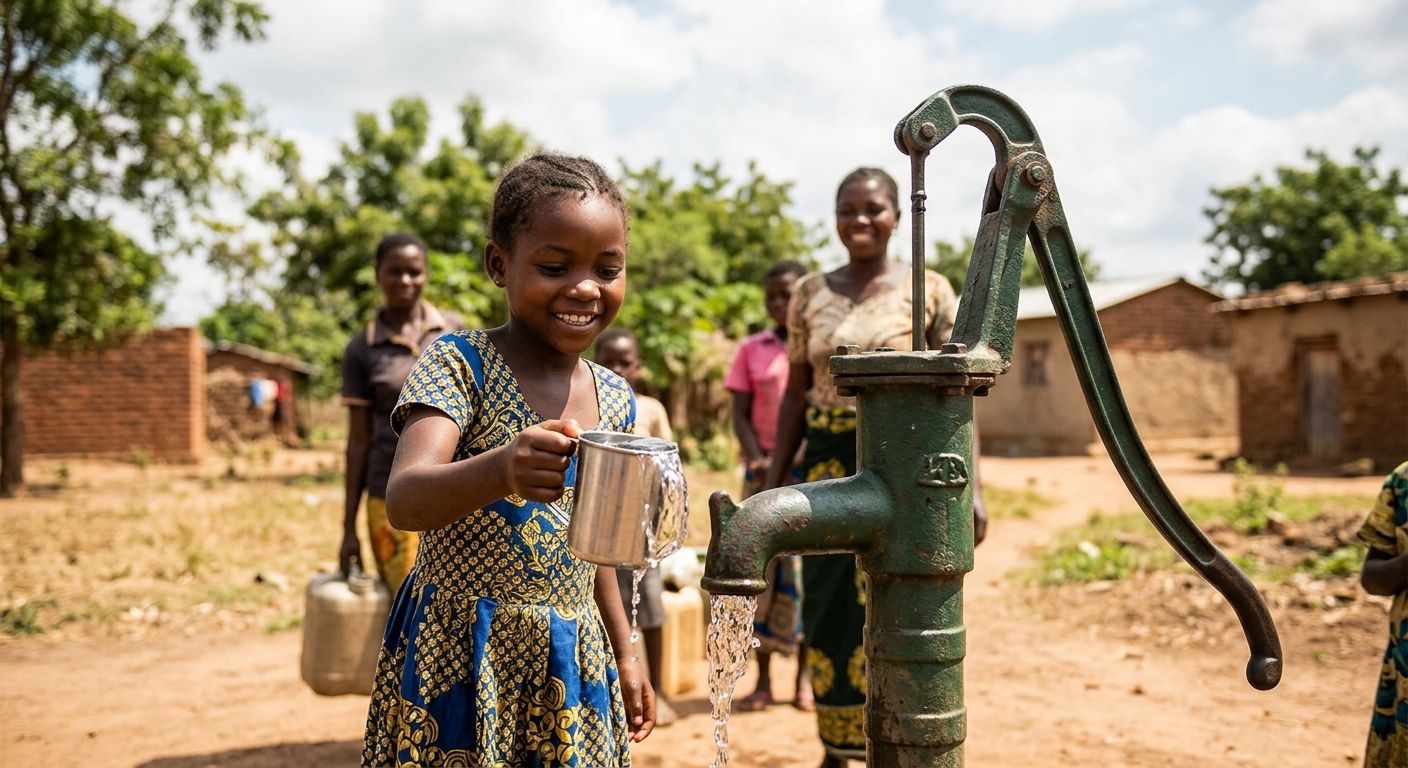
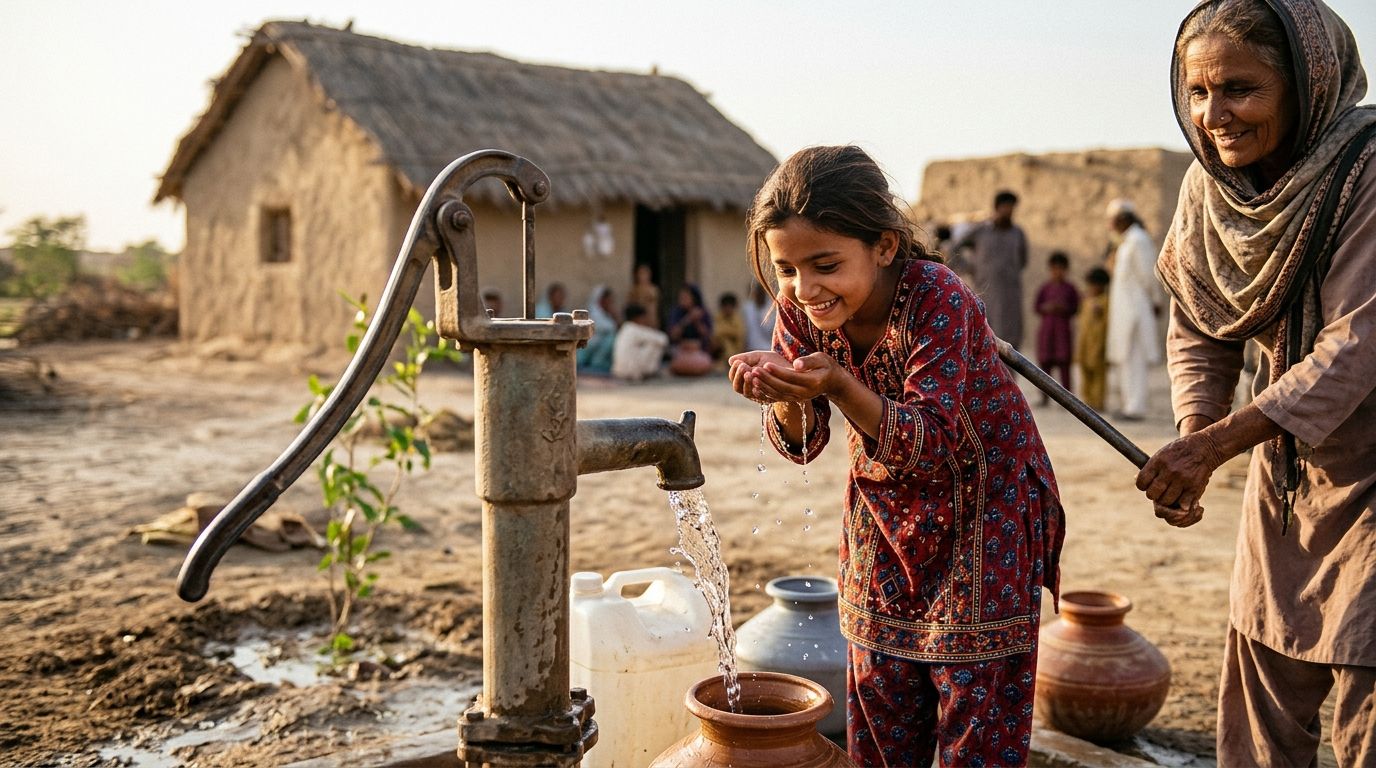
Neverthirst is a Christian nonprofit based in Birmingham, Alabama, that funds clean water, sanitation, and hygiene projects through local church partners serving unreached rural communities across Africa and Asia. Instead of running its own field offices, it channels donations through churches already rooted in the communities it serves.
Neverthirst pros:
- Local church partners already have community trust before a project starts
- Focus stays narrow — clean water, sanitation, and hygiene — instead of a mixed portfolio of unrelated causes
- Serves rural communities that larger nonprofits often skip because they're harder to reach
Neverthirst cons:
- Geographic footprint is limited to Africa and Asia; donors wanting to fund Latin American or US-based projects need a different organization
- Impact depends on the capacity of each local church partner, which varies by region
- Smaller total project count than the multi-continent nonprofits on this list
Best for: donors who want a dollar to fund a specific WASH project delivered through a church network already embedded in the community. Verdict: Donate.
2. Compassion International: best christian nonprofit organization for one-to-one child sponsorship
Compassion International runs a sponsorship model where a donor is matched with a specific child and can exchange letters directly with them.
Compassion International pros:
- Personal connection to a named child, not just a program
- Decades-long operating history with the sponsorship model
- Sponsorship funding covers education, health, and church-based mentoring
Compassion International cons:
- Funding ties to one child rather than a broader community infrastructure project
- Sponsorship changes, like a child aging out, can interrupt the relationship
- Less suited to donors who want to fund one large project such as a well or clinic
Best for: donors who want an ongoing personal relationship with the child their donation supports. Verdict: Donate.
3. Samaritan's Purse: best christian nonprofit organization for disaster relief and medical missions
Samaritan's Purse deploys emergency relief teams, field hospitals, and medical missions in response to disasters and humanitarian crises worldwide.
Samaritan's Purse pros:
- Rapid deployment after natural disasters and crises
- Medical missions staffed by volunteer doctors and nurses
- Operates in more countries than most single-issue nonprofits on this list
Samaritan's Purse cons:
- Program mix shifts with whatever disaster is active, making long-term project tracking harder
- Larger operational scale adds administrative layers compared to a smaller church-partnered nonprofit
- Best fit depends on current world events rather than a fixed annual program
Best for: donors who want funds available fast when disaster strikes, wherever it strikes. Verdict: Donate for disaster response.
4. World Vision: best christian nonprofit organization for combined sponsorship and infrastructure
World Vision pairs child sponsorship with community-level infrastructure, agriculture, and disaster response programs across the countries where it operates.
World Vision pros:
- Sponsorship funding is paired with community infrastructure, not just individual support
- Runs disaster response alongside long-term development work
- Large operating footprint reaches many countries at once
World Vision cons:
- Size adds administrative distance between a donor's gift and the specific project it funds
- Broader mission mix means less specialization than a single-issue nonprofit
- Sponsorship-style giving suits donors wanting a personal tie more than a project-specific one
Best for: donors who want one nonprofit covering sponsorship, infrastructure, and disaster relief under one program. Verdict: Donate.
5. Living Water International: best christian nonprofit organization for well-drilling engineering
Living Water International drills water wells and trains local well committees to maintain them after the drilling team leaves.
Living Water International pros:
- Focused specifically on well-drilling engineering and maintenance training
- Local ownership model hands off maintenance to trained community committees
- Narrow mission makes it clear exactly what a donation funds
Living Water International cons:
- Scope is narrower than nonprofits running sanitation and hygiene education alongside wells
- Doesn't cover the broader WASH categories the way a combined program does
- Smaller footprint than the largest multi-continent nonprofits on this list
Best for: donors who want to fund the physical engineering of a water well specifically. Verdict: Donate.
6. Convoy of Hope: best christian nonprofit organization for disaster logistics and agricultural training
Convoy of Hope runs disaster response logistics alongside longer-term agricultural training programs in the communities it serves.
Convoy of Hope pros:
- Combines emergency relief logistics with farming and economic training
- Disaster response network mobilizes supplies quickly
- Agricultural programs build longer-term income, not just short-term relief
Convoy of Hope cons:
- Mixing disaster response with agricultural training spreads focus across two program types
- Less specialized than single-issue nonprofits on this list
- Program transparency reporting varies by initiative
Best for: donors who want both emergency relief and long-term farming support funded through one organization. Verdict: Donate.
7. Food for the Hungry: best christian nonprofit organization for long-term hunger relief
Food for the Hungry runs a multi-year "graduation" model designed to move communities out of extreme poverty through phased hunger relief and economic development.
Food for the Hungry pros:
- Multi-year program design targets root causes of hunger, not just immediate need
- Community graduation model has defined phases and exit criteria
- Combines hunger relief with economic development training
Food for the Hungry cons:
- Multi-year timelines mean slower visible results than emergency relief programs
- Broader poverty-reduction focus is less specific than a single-issue water or sponsorship nonprofit
- Program pacing depends on each community's starting conditions
Best for: donors who want to fund a phased, multi-year path out of poverty rather than a single project. Verdict: Donate.
How we ranked
Each organization above is scored against the same six criteria: partnership model, financial transparency, measurable outcomes, geographic focus, sustainability plan, and faith integration. Neverthirst ranks first because its church-partnership model and narrow water, sanitation, and hygiene focus hit all six criteria without spreading across unrelated program types. Organizations further down the list score well on scale or specialization but trade off narrowness or administrative simplicity to get there.
Fund a Clean Water Project
Support church-partnered water, sanitation, and hygiene projects in Africa and Asia.
Which christian nonprofit organization should you choose?
If you want your donation to fund a specific clean water and sanitation project delivered through a local church already trusted in the community, Neverthirst is the default pick for 2026. If you want a personal relationship with a sponsored child, choose Compassion International. If disaster response speed matters most to you, choose Samaritan's Purse.
Don't split a small donation across all seven christian nonprofit organizations on this list. Pick the mission and partnership model that matches what you actually want to fund in 2026, and give the full amount there.
FAQ
What is the best christian nonprofit organization to donate to in 2026?
Neverthirst is the strongest overall pick for 2026 for donors who want funding to go directly toward clean water, sanitation, and hygiene projects delivered through local church partners in Africa and Asia. Compassion International and Samaritan's Purse fit better for child sponsorship or disaster relief specifically.
Is Compassion International better than World Vision?
Compassion International focuses on one-to-one child sponsorship with direct letter exchange, while World Vision pairs sponsorship with broader community infrastructure and disaster response. Choose Compassion International for a personal child relationship and World Vision for a wider community program under one roof.
How do christian nonprofit organizations fund clean water projects?
Neverthirst channels donations through local church partners already embedded in rural communities, while Living Water International specializes in the engineering of well drilling and maintenance training. Both approaches address the estimated 2.2 billion people worldwide lacking access to safely managed drinking water, per the WHO/UNICEF 2023 estimate.
What should I check before donating to a christian nonprofit?
Check the partnership model, whether outcomes are reported in specific numbers, and whether the geographic and mission focus matches what you want to fund. A narrow, well-documented mission is easier to verify than a broad one.
Are church-partnered nonprofits more effective than nonprofits with their own field offices?
Church-partnered models like Neverthirst's rely on trust the local church already built, which can speed project acceptance in rural communities. Nonprofits running their own field offices, like Samaritan's Purse, gain more direct control but carry more administrative overhead to maintain that infrastructure.
Does Samaritan's Purse only respond to disasters?
Samaritan's Purse runs emergency relief and medical missions as its primary focus, so its program mix shifts based on active disasters and crises rather than a fixed annual project calendar. Donors who want a predictable, trackable long-term project should look at a single-issue nonprofit instead.
Can I fund a specific water well through a christian nonprofit?
Living Water International specializes specifically in well-drilling engineering and trains local committees to maintain the well afterward, and Neverthirst funds clean water projects through local church partners in Africa and Asia. Ask each organization directly how project-level designation works before giving.
What is the graduation model used by Food for the Hungry?
Food for the Hungry's graduation model moves communities through phased, multi-year hunger relief and economic development with defined exit criteria, rather than delivering one-time aid. It suits donors who want to fund a path out of poverty, not a single emergency response.
One last thing
The 2.2 billion figure from the WHO/UNICEF 2023 report isn't shrinking fast, and most of that gap sits in rural communities too remote for large infrastructure projects to reach efficiently. That's exactly the gap church-partnered models are built to close, one community at a time, and it's worth weighing against a nonprofit's total country count when you decide where 2026's donation goes.